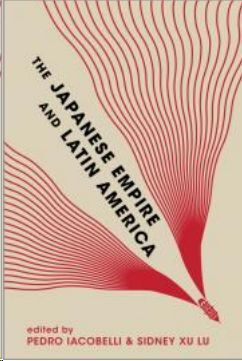
The Japanese Empire and Latin America provides a comprehensive
analysis of the complicated relationship between Japanese migration and
capital exportation to Latin America and the rise and fall of the empire in
the Asia-Pacific region. It explains how Japans presence influenced the
cultures and societies of Latin American countries and also explores the
role of Latin America in the evolution of Japanese expansion. Together,
this collection of essays presents a new narrative of the Japanese
experience in Latin America by excavating trans-Pacific perspectives that
shed new light on the global significance of Japans colonialism and
expansionism.
The chapters cover a variety of topics, such as economic expansion,
migration management, cross-border community making, the surge of proJapan propaganda in the Americas, the circulation of knowledge, and the
representation of the "other" in Japanese and Latin American fictions. By
focusing on both government action and individual experiences, the
viewpoints examined create a complete analysis, including the roles the
empire played in the process of settler identity formation in Latin
America.
While the colonialist and expansionist discourses in Japan set a stage for
the beginning of Japanese migration to Latin America, it was the vibrant
circulation of information between East Asia and the Americas that
allowed the empire to stay at the center of the cultural life of communities
on the other side of the globe. The empire left an enduring mark on Latin
America that is hard to ignore. This volume explores long-neglected
aspects of the Japanese global expansion; and thus, moves our
understanding of the empires significance beyond Asia and rethinks its
legacy in global history.
About Editor/s
Pedro Iacobelli is associate professor of history and director