With the break up of the Spanish empire in South America, the continent
split into nine independent states with often ill-defined boundaries. One of
these was that between Bolivia and Chile, which were separated by the
Atacama Desert, tone of the driest regions in the world. When it was
realised that the area contained nitrates that the world needed for
explosives and fertiliser the scene was set for the inevitable clash.
When war broke out in February 1879, both sides found themselves
unprepared for war. Rapid armament followed as the Peruvians were
dragged into the conflict in support of their Bolivian allies. Initially there
was a tiresome naval war of blockade and guerre de course. Two naval
actions decided the naval campaign in favour of the Chileans who then
proceeded to use their naval power to attack the Allies' isolated armies
and capture Lima two years after war had broken out. Fighting then
developed into a cruel and ruthless guerrilla war in the Andes, sometimes
even pitting Peruvian against Peruvian, before the Peruvians finally
concede defeat.
The war was notable in the West for fights involving ironclads,
particularly the Battle of Angamos, which saw the only time ironclads
were pitted against each other between the Battle of Lissa and the Battle
of the Yalu River. The war helped formulate Captain Mahan's thoughts in
"The Influence of Sea Power upon History".
The land war was more or less ignored abroad, although it included some
of the biggest battles ever fought on the continent, using all the latest
technology, including breech loading rifles and cannons and machine
guns. The armies on both sides initially lacked experience and training as
well as modern equipment. The Bolivian Army started the war with 806
officers and only 1369 other ranks! In the end the Chileans won because
of their more stable government, better financial situation and their
control of the sea, due to their two superior ironclads.
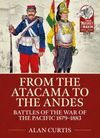
From the Atacama to the Andes tells the brutal struggle between two
sides to control the wealth of the Atacama and for retention of Bolivia's
coast. The result was that Chile gained the mineral resources of the "New
North" and Bolivia became the second landlocked country on the
continent, paving the way for the even more catastrophic Chaco War 50
years later.
About Author/s
The author has spent over forty years studying the War of the Pacific
whilst working first in international banking and then in education. At
present he is working on further books on warfare between India and
Pakistan between 1947 and 1971.
Page 27/