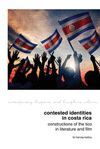
Costa Rica is a country known internationally for its eco-credentials,
dazzling coastlines, and reputation as one of the happiest and most
peaceful nations on earth. Beneath this façade, however, lies an
exclusionary rhetoric of nationalism bound up in the concept of the tico,
as many Costa Ricans refer to themselves.
Beginning by considering the very idea of national identity and what this
constitutes, this book explores the nature of the idealised tico identity,
demonstrating the ways in which it has assumed a white supremacist,
Central Valley-centric, patriarchal, heteronormative stance based on
colonial ideals. Chapters two and three then go on to consider the
literature and films produced that stand in opposition to this normative
image of who or what is tico and their creation as vehicles of soft power
which aim to question social norms.
This book explores protest literature from the 1970s by Quince Duncan,
Carmen Naranjo, and Alfonso Chase who narrate their experiences from
the margins of society by virtue of their identity as Afro-Costa Rican,
feminist, and homosexual authors. Cinema from the twenty-first century is
then analysed to demonstrate the nuanced position chosen by national
directors Esteban Ramírez, Paz Fábrega,
Jurgen Ureña, and Patricia Velásquez to challenge the dominant nationimage
as they reinscribe youth culture, a female consciousness, trans
identity, and Afro-Costa Rica onto the fabric of the nation.
Throughout the book, Harvey-Kattou offers clear, concise readings on film
and literature to articulate new models of Costa Rican belonging and
national identity. Stephanie M. Pridgeon, Bulletin of Spanish
Studies
About Author/s
Liz Harvey-Kattou is a Lecturer in Hispanic Studies at University of