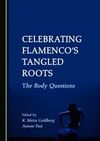
This collection of essays poses a series of questions revolving around
nonsense, cacophony, queerness, race, and the dancing body. How can
flamenco, as a diasporic complex of performance and communities of
practice frictionally and critically bound to the complexities of Spanish
history, illuminate theories of race and identity in performance? How can
we posit, and argue for, genealogical relationships within and between
genres across the vast expanses of the African - and Roma - diaspora?
Neither are the essays presented here limited to flamenco, nor,
consequently, are the responses to these questions reduced to this topic.
What all the contributions here do share is the wish to come together,
across disciplines and subject areas, within the academy and without, in
the whirling, raucous, and messy spaces where the body is free - to
celebrate its questioning, as well as the depths of the wisdom and
knowledge it holds and sometimes reveals.
About Editor/s
K. Meira Goldberg is a flamenco performer, choreographer, teacher, and
scholar. She teaches at Fashion Institute of Technology, and is Scholar-in-
Residence at the Foundation for Iberian Music at the CUNY Graduate
Center. She has instigated and collaborated on multiple books, exhibits,
and international conferences. Her book Sonidos Negros: On the
Blackness of Flamenco (2019) won the Barnard Hewitt Award for
outstanding research in theatre history from the American Society for
Theatre Research.
Antoni Pizà has taught Music History at Hofstra University, the City
College, John Jay College of the City University of New York, and the
Conservatory of Music and Dance in Palma de Mallorca, Spain. He is
currently the Director of the Foundation for Iberian Music at the Barry S.
Brook Center for Music Research and Documentation of the Graduate
Center, USA. He has authored and co-edited numerous books in English,
Spanish and Catalan.
Contents